

Go to Most Played









































Be the first to comment


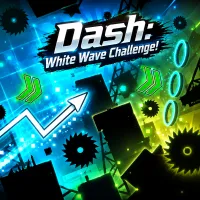
Geometry Wave Hero is the ultimate test of precision and rhythm for gamers who crave a high-speed challenge. Navigate through neon-drenched corridors and sharp obstacles in this intense arcade experience. Master the art of the zig-zag as you sync your movements to the beat and strive for a perfect run.
The world of rhythm-based action is often filled with jumping blocks and sliding icons, but every once in a while, a game comes along that strips away the fluff and focuses on one pure, exhilarating mechanic. Enter the world of geometric precision where your survival depends entirely on your ability to ride the wave.
At its core, the experience is a masterclass in "simple to learn, impossible to master" gameplay. You aren't just moving an icon; you are controlling a pulse of energy. The physics are sharp, the response time is instantaneous, and the margin for error is thinner than a pixel.
The mechanics are elegantly straightforward. By holding your input, your avatar surges upward at a sharp diagonal angle. Release it, and gravity takes over, sending you diving toward the floor.
The magic happens in the space between those two actions. Finding the "sweet spot": that rhythmic tapping that allows you to hover in a straight line through a narrow corridor, is where the real skill lies.
Visually, the game is a feast for the senses. It utilizes a high-contrast aesthetic that makes every obstacle pop against the background. This isn't just for style; when you are traveling at breakneck speeds, you need that visual clarity to anticipate the spikes and walls looming ahead.
If you want to reach the end of the line, you need more than just fast fingers; you need a strategy.
The environment isn't random. The placement of obstacles often correlates with the underlying soundtrack. If you find yourself struggling with a specific section, try focusing less on the visual cues and more on the tempo of the music. Your ears might just lead you where your eyes cannot.
One of the biggest mistakes beginners make is overcorrecting. Large, sweeping movements are necessary for vertical climbs, but most of the game is won in the micro-adjustments. Short, controlled taps provide much better stability, allowing you to react to sudden changes in the terrain without losing control of your momentum.